
Keeping your worksite clean isn’t just about presentation. For tradies and contractors dealing with concrete surface prep, grinding and cutting, dust control can make or break the job. Without proper dust management, you’re not only dealing with constant clean-up but potential safety and compliance risks too. If you’re handling fine concrete dust or working indoors where particles can hang in the air longer, things get serious fast.
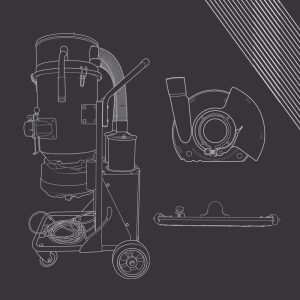
That’s why choosing the right dust extractor matters, especially an H class dust extractor. These units are built to handle hazardous fine dust, the kind that lingers in the air after a solid session with planetary grinders or when cutting into cured concrete with a demo blade. If you’re doing any extended floor grinding or dry polishing, it’s worth knowing what to look for and why H class matters.
You’ve probably seen ‘M class’ or ‘H class’ labels floating around on gear, but what does H class actually mean? Simply put, H class dust extractors are designed to handle the most dangerous kinds of dust. We’re talking about the fine silica particles that come from grinding, cutting or polishing concrete — dust so fine it can’t be seen, yet can cause serious health issues if breathed in over time.
What sets H class apart is its ability to trap that type of ultra-fine dust and stop it from escaping back into the environment. These extractors are fitted with high-efficiency HEPA filters and tightly sealed systems that catch microscopic particles before they’re inhaled on site. There’s no guessing involved — these machines have to meet strict safety standards and filtration specs to be classed as H.
Here’s what makes an H class dust extractor different:
These units are often required on commercial construction sites, where airborne dust is unavoidable. If you’re grinding hardened floors with a planetary grinder or using angle grinder blades inside an enclosed area, anything less than H class could be putting you and your crew at risk.
Not every machine that says H class will meet the mark. Some are big on power but lack mobility. Others may be more compact, but less suited to high-dust jobs like floor grinding. Here are the key features you should be paying close attention to when comparing options.
Whether you’re working with hand grinders or full-scale planetary machines, choosing an extractor built for your task means faster clean-up, less filter wear and safer air on site.
The right H class dust extractor should match the tools and style of work you’re doing. For concrete resurfacing or coating removal with planetary grinders, you’ll need a large-capacity machine with enough power to keep up with the dust load. Gear that moves a lot of air and has a generous bin saves time because you won’t be stopping as often to empty it.
On detail or edge work with hand-held angle grinders or polishers, you might not need as much grunt — but staying H class compliant is still important. Opting for a smaller unit with good filtration makes for an easier pack-up and quicker moves between rooms or job sites.
Another consideration is the kind of dust being created. Concrete grinding makes very fine dust, while epoxy and tile glue removal may throw off larger particles. A good H class unit should deal with both and keep your workspace safe while reducing wear on your gear.
Here’s a quick reference:
Getting the pairing right helps minimise airborne dust and lets extractors perform at their best, giving your gear and workers the best possible environment.
High-quality dust extraction makes daily site work run smoother and safer. On big commercial jobs, especially flooring projects done with planetary grinders, the amount of travelling dust can build up fast if not controlled properly. Visibility drops, filters clog, and even your floor finish can suffer.
Using a true H class extractor helps workers breathe easier by knocking back the fine silica dust that floats around unnoticed. It’s the sort of airborne material that doesn’t seem obvious until the light hits and you realise the air’s full of it. With the right filtration, it’s gone before it becomes a problem.
Cleaner floors also help your machines. Grinding heads won’t clog as fast and you’ll get better results from polishing pads or cutting blades. Cleaner sites keep your job running on time and stop the mess from messing with your tools.
There’s also jobsite compliance to think about. If a safety officer walks on and your gear isn’t up to scratch, trouble can come quickly. Proper H class systems show you’re serious about safety and save time by passing checks without issue or shutdowns.
Every contractor runs their kit differently. Whether you’re prepping thousands of square metres with a planetary grinder or cutting control joints in smaller slabs with angle grinders, the right H class extractor fits around how you get the job done.
It’s worth stepping back and thinking through setup, jobsite access, dust volume and clean-up systems. Going with something too small will lead to constant stops and more mess, while going too big adds headaches for transport and mobility. Try to match the machine with your typical jobs — not just for size, but for dust type and how portable you need things to be.
A good extractor reduces dust, protects your gear and helps you finish faster. When your tools keep running cleaner and longer, the results show up in better finishes and less kit failure.
There’s plenty of choice out there now. Some units are made for grunt and capacity, others are more nimble but still offer that certified filtration you need. Take your time, look at what you’re really putting your tools through, and make the call based on what works for you on the ground.
No matter the project size, having the right extraction setup makes a real difference in keeping your job site cleaner and safer. Whether you’re floor grinding with a planetary machine, polishing edges, or running angle grinder blades on smaller sections, using a reliable H class dust extractor means less cleanup, better air quality and longer equipment life. Browse the range at Auskut Diamond Tools to find a unit that suits the way you work.

Sign up to our email newsletter and we’ll send you a 10% discount code for your next order. No spam. We hate it as much as you do. Unsubscribe anytime.
10% off eligible products on orders up to $300. One use per customer.
Terms and conditions apply.