






If you’ve ever removed old tiles from a concrete floor and thought you’d be left with a clean slab underneath, you’ve probably discovered that’s not always the case.
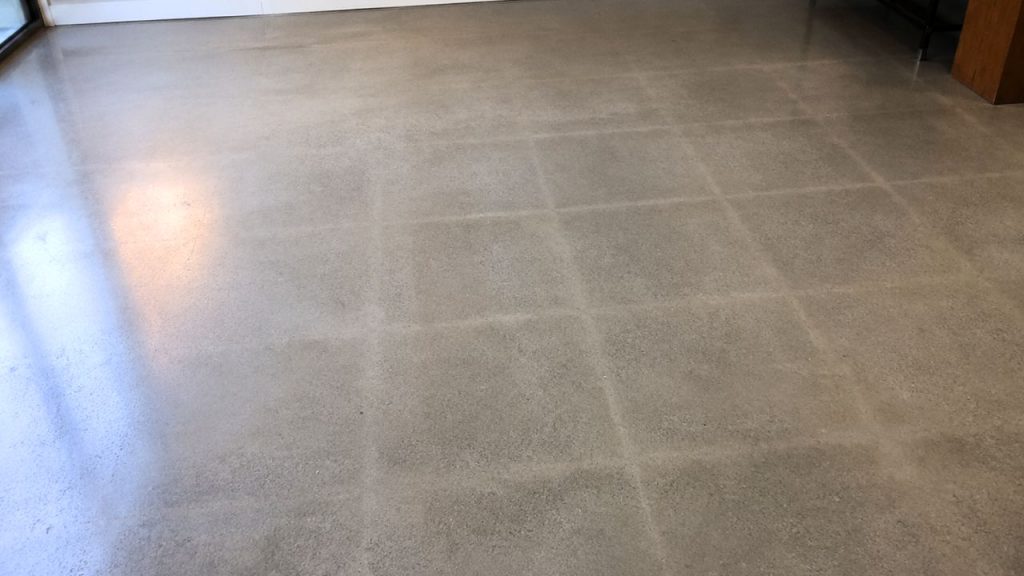
One of the most frustrating surprises contractors encounter is concrete ghosting – a visible outline of old grout lines, tile patterns, or adhesive layouts that remain in the slab long after the floor covering has been removed.
Unfortunately, ghosting isn’t simply dirt or leftover adhesive. In many cases, it’s actually inside the concrete itself.
Concrete is naturally porous. Over the years, moisture, contaminants, cleaning chemicals, adhesives, grout pigments and other materials can penetrate the surface of the slab.
When tiles are installed, the grout lines often act as a pathway for these materials to travel deeper into the concrete.
As a result, the slab can absorb contaminants differently beneath grout joints than beneath the tiles themselves. Once the tiles and adhesive are removed, these variations become visible as a permanent pattern that mirrors the original tile layout.
This phenomenon is commonly referred to as ghosting.
Ghosting often becomes most noticeable when:
What may appear invisible initially can suddenly emerge once the surface is processed.
This is because grinding exposes fresh concrete while also revealing differences in porosity, contamination levels and absorption rates across the slab.
Sometimes.
The challenge is that nobody knows exactly how deep the contamination extends until work begins.
In some cases, a few passes with a grinder will completely remove the ghosting. In others, the pattern may continue several millimetres into the slab.
Factors that influence removal include:
This is why experienced contractors are often cautious about guaranteeing complete ghost removal before testing the floor.
Ghosting becomes particularly problematic when a polished concrete finish is planned.
Even if the floor is mechanically polished to a high gloss, the underlying pattern can remain visible beneath the surface.
This can create:
For this reason, identifying potential ghosting early in a project is critical when quoting polished concrete work.
Unfortunately, there is no universal solution.
Potential remediation options may include:
Concrete ghosting is one of the more unpredictable challenges encountered during floor preparation and polishing projects.
While it often originates from old tile installations and grout lines, the visible pattern is usually a symptom of contamination that has penetrated into the slab over many years.
Some ghosting can be removed with grinding. Some cannot.
The key is identifying it early, performing test areas where necessary, and selecting the most appropriate remediation strategy for the intended floor finish.
If you’re preparing a slab for polishing, coating or refurbishment, having the right grinding equipment and diamond tooling can make the investigation and remediation process significantly more efficient.
Browse Auskut’s range of concrete grinders, diamond tooling and floor preparation equipment to tackle even the most challenging slab remediation projects.

Sign up to our email newsletter and we’ll send you a 10% discount code for your next order. No spam. We hate it as much as you do. Unsubscribe anytime.
10% off eligible products on orders up to $300. One use per customer.
Terms and conditions apply.